The Genesis 1-Genesis 2 Contradiction

One of the common allegations thrown against creationists is that Genesis 1 and Genesis 2 are contradictory. This claim is popular, repeated ad nauseum by both old earth Christians and the atheist critics of the Bible. However, it is purely bogus. In making claims that Genesis 1 and 2 contradict one another, the scoffers assume facts not in evidence. Let’s have a look at Genesis 1 and Genesis 2 and see if they conflict.

The Fitness Illusion

The problem here is three fold. One, the evolutionists are very inconsistent with their application of this definition. Second, measuring fitness in this way is, in a sense, the ultimate rescuing device. Third, fitness must be measured at the organismal level, not the genetic level, but evolutionists almost always appeal to genetic fitness.

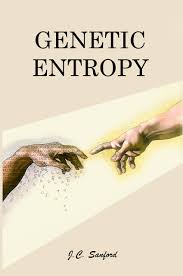
Resource Review: Genetic Entropy

We are constantly told that evolution can build the genome over time, through chance mutations favored by natural selection. But what if this claim is false? What if the genome is not improving? What if, instead, it is actually degrading over time? Further, what if the scientific community has known this for decades and refuses to acknowledge it because of the damage it would do to evolution? Welcome to the premise of Dr. John Sanford’s book, Genetic Entropy. In the book, Sanford, a former evolutionist and emeritus professor at Cornell University looks at whether evolution, the “primary axiom” as he terms it, can work, using population genetics.

Does Everything Have to be a Species?

Evolution determines ancestry by reference to a phylogenetic tree. Phylogenetic trees are built based on homologous traits. Homology refers to similarity in the traits. Therefore, in the evolutionary view, gross overall similarity, in either genetics or morphology, is determining ancestry. This idea matters for our discussion because speciation, in an ultimate sense, is a question of ancestry. Many species concepts appeal in some sense or another to a most recent common ancestor.