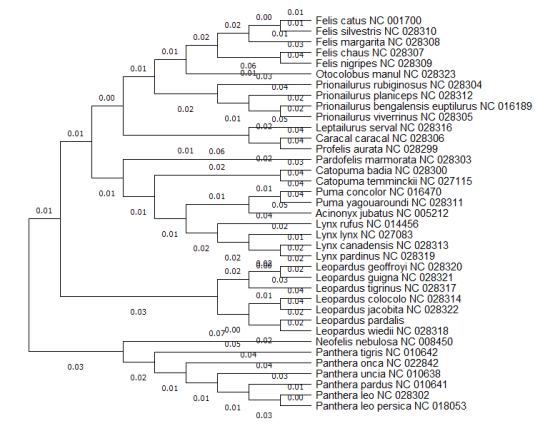
I’ve written about phylogenetics before, numerous times, but I wanted to get into something a little more practical and deep at the same time today. I wanted to explain how the evolutionists try to root their overarching tree of life. Most phylogenetic trees focus on small groups of animals. However, for evolution to be true, all life must go back to a common ancestor. That means that somewhere, the evolutionists need to plant the tree of life, aka “root” it on some, likely now-extinct species. Let’s have a look at how they do it.
Tag: creationism
Review: Against the Tide
I recently had the opportunity to view the recently released documentary, Against the Tide narrated by Kevin Sorbo from the first God’s Not Dead film and featuring Dr. John Lennox of Oxford. I say documentary but I’m not sure what exactly to call it. It was equal parts hagiography of Lennox, and documentary of how atheism’s arguments against God can be answered. However the answers were poor, because Lennox was the one giving them.
Plant Evolution to Avoid Humans?
A recent study came out that claimed that some plants have evolved explicitly to avoid harvesting by humans. The study claimed that a species of plant, Fritillaria delavayi, a plant whose bulb is used regularly in Chinese herbal medicine, has evolved to make it harder for humans to find it and harvest it. The study, published in the journal Current Biology, is very interesting, but equivocates on the word “evolution”, like most so called evidences for evolution do.
DNA Energy Code?
A recent article out of the Quarterly Review of BioPhysics, a peer reviewed journal out of the UK, made a startling and outrageous claim. According to the paper, the genetic code evolved, not always toward functionality, but towards thermodynamic stability, which just happened to coincide with functionality in many cases. The paper makes claims that are at odds with typical evolutionary explanations as well as some very interesting claims about thermodynamics applied to genetics. Lets have a look at this article and see what we can learn.